Yesterday, at the FSC General Assembly in Vancouver, FSC members voted in favour of a motion to scrap the ban on the certifying plantations that were established on forests cleared after 1994.
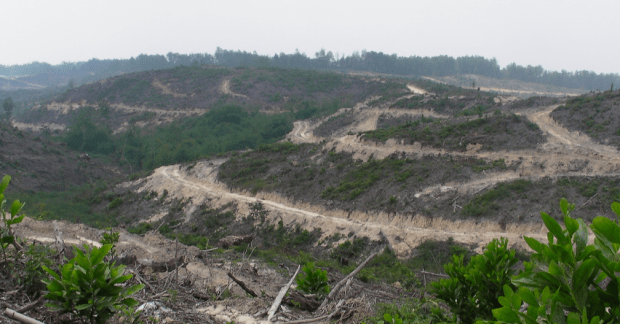
Yesterday, at the FSC General Assembly in Vancouver, FSC members voted in favour of a motion to scrap the ban on the certifying plantations that were established on forests cleared after 1994.
On December 8th, FSC Brazil announced that the certificate of the country’s largest certified forestry operation, Jari, had been suspended following raids on companies suspected of massive fraud and laundering of illegal timber. Such certificate suspensions or terminations usually provoke claims from FSC’s supporters and apologists that “this shows that the system is working” – because unworthy companies are losing their endorsement. More often, however, it merely raises questions as to how the company was ever certified in the first place, and how it maintained its certificate for often many years despite there being clear problems. Jari is certainly one of these cases. Inevitably, it also raises serious questions about the ability of the FSC to properly control the work of the certification companies – and whether wood-users were misled about the acceptability of the company’s certified products in the mean time. (more…)
Last month, we reported on how FSC’s former Executive Director, Andre de Freitas, had raised serious doubts about the FSC’s Chain of Custody (CoC) certification mechanism, describing it as a “myth”. Now a new and, for the FSC, more worrying voice has been added to those expressing concern about the integrity of CoC certificates; that of NEPCon, one of FSC’s accredited certifiers.
Motion 65 to the FSC’s General Assembly, its highest decision-making authority, was tabled by Judy Rodrigues of Greenpeace International. The motion was intended to set out new requirements for the FSC when certifying logging companies in what Greenpeace describes as ‘intact forest landscapes’ (or IFLs). These are important large areas of forest which remain undamaged, and are rapidly declining and being fragmented – often by commercial logging – the world over. Greenpeace rightly wishes to see these forests better protected – but has failed to prevent the FSC from legitimising their destruction.
This is probably not the kind of publicity that FSC was hoping for around its 3-yearly love-in, the General Assembly. But as the FSC’s members make their way home from Seville, no doubt full of self-congratulation for the ‘progress’ they are making, the reality is becoming increasingly hard to avoid: the FSC system is in deep crisis.
A recent paper in the Journal of Business Ethics provides an in-depth case study of FSC as a multi-stakeholder initiative.
The report, which is titled, “The Politics of Multi-Stakeholder Initiatives: The Crisis of the Forest Stewardship Council”, found that FSC has failed to transform commercial forestry practices and has not had a meaningful impact on stopping tropical deforestation.
Here’s a handy guide to 10 of the worst things about FSC. We look forward to reading your suggested additions in the comments.
In 2006, when we started FSC-Watch, we wrote that, “whilst the structural problems within the FSC system have been known for many years, the formal mechanisms of governance and control, including the elected Board, the General Assembly, and the Complaints Procedures have been highly ineffective in addressing these problems.”
Unfortunately, that still remains true today.
On Wednesday, 26 February 2014, Ian Hanna, FSC International’s Director of Strategic Development, will be interviewed by triplepundit.com.
It’s official: the FSC is now setting out to use its grotesque Controlled (sic) Wood Policy in order to ‘launder’ wood from areas experiencing recent deforestation into the FSC certified wood supply chain.
In June of this year, we reported on the shocking atrocities against local communities happening in two FSC ‘Controlled Wood’ certified logging operations in the Democratic Republic of Congo. One of the two companies concerned, SODEFOR, had, by the time we reported, already had its certificate ‘suspended’, and was the subject of a formal complaint submitted by Greenpeace. The other, SIFORCO, remains certified (by SGS) to this day, but has also recently had a complaint filed against it by Greenpeace.
 FSC-Watch